The Ultimate Guide to Removing Pet Hair, Stains & Odors from Sofas
Hiring professional sofa cleaning services every 3 to 6 months is the best solution if you have pets. Between visits, blot fresh stains with an enzymatic cleaner (not soap), vacuum upholstery weekly to get rid of pet hair, and sprinkle baking soda overnight for odor resets. That combination handles 90% of what pets throw at a couch.
A dog does not care that the sofa costs three months of rent. Pets claim furniture on their own terms, leaving behind three problems: hair woven into every fibre, stains that soak past the surface, and odors that outlast every candle in the drawer. All these problems can badly affect the indoor air quality while leading to different allergies or health issues, so a quick fix is non-negotiable.
Each demands a different fix. Hair needs friction, stains need enzymes, not detergent. Odors need molecular breakdown, not masking. And in Dubai, where indoor humidity is between 60 and 80 percent in summer, every problem accelerates faster than in drier climates.
Key Takeaways
Friction vs. Suction: Taken from your section on using a damp rubber glove and the electrostatic bond.
Enzymes vs. Soap: Taken from your section explaining why standard soap leaves uric acid crystals and why enzymatic cleaners are recommended by professionals.
Avoid Heat: Taken from your “Quick Tip” regarding the Carpet and Rug Institute guidelines on how heat sets protein-based stains.
The Humidity Factor: Taken from your specific data about Dubai’s 60-80% humidity and how it accelerates bacterial growth in the foam.
Care Codes: Taken from your section on identifying W, S, and X tags before choosing a cleaning method.
Table of Contents
ToggleQuick-Reference Checklist: Problem, Cause, Fix
| Problem | Quick Fix | Deep Fix |
| Hair | Damp rubber glove + vacuum | Professional extraction |
| Stains | Blot + enzymatic cleaner | Hot-water extraction |
| Odour | Baking soda overnight | Industrial enzyme flush |
How to Remove Pet Hair from Sofa Fabric?
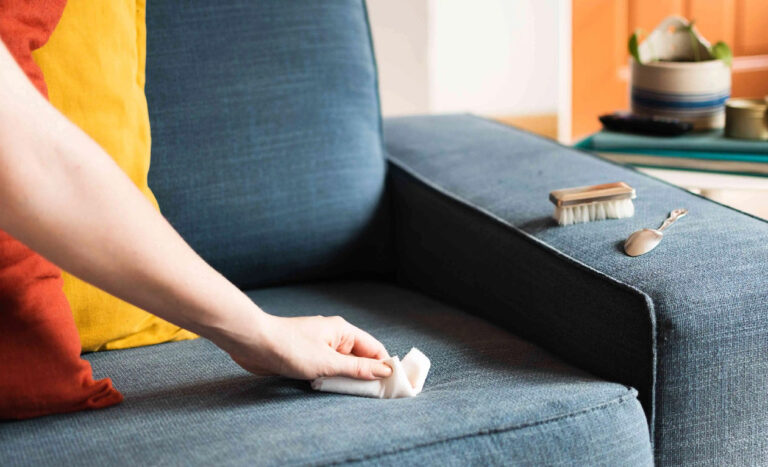
Friction removes pet hair better than suction alone. A damp rubber glove dragged across upholstery in one direction collects more embedded fur in 60 seconds than most handheld vacuums manage in five minutes.
What Works (Ranked by Effectiveness)
Dampen a standard kitchen glove, run it across the fabric in long one-directional strokes, and rinse the collected fur clump under a tap. Follow with a vacuum fitted with an upholstery attachment nozzle, using slow overlapping passes.
For stubborn embedded hair, a rubber squeegee or reusable roller generates enough electrostatic pull to lift what vacuuming misses. A HEPA filter vacuum is ideal here because it traps pet dander and allergen particles.
Hair Removal by Sofa Fabric Type
Not every sofa fabric responds to the same tool. Check the upholstery cleaning code on your sofa’s care tag before choosing a method. Fabrics marked W (water-safe) handle damp-glove techniques well. Fabrics marked S (solvent-only) or X (vacuum only) need dry methods exclusively, and WS (water or solvent) gives you the most flexibility.
Microfiber releases pet hair relatively easily with a damp cloth or lint brush. Performance fabrics like Crypton and Sunbrella are made with tight weaves, making them the most pet-friendly upholstery options on the market. Velvet, bouclé, and chenille trap hair so aggressively that surface tools barely help. Those fabrics need professional extraction equipment that reaches the base of the pile.
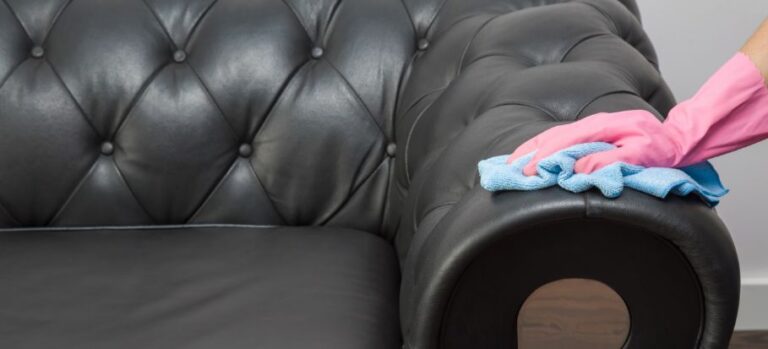
Leather and faux leather are the easiest to maintain. Hair sits on the surface and wipes off with a microfiber cloth, though pet claws can scratch aniline and semi-aniline leather over time.
How to Remove Pet Urine Stains and Odor from a Couch?
Enzymatic cleaners are the only reliable solution. Standard soap cleans the surface but leaves uric acid crystals intact inside cushion foam, and those crystals reactivate every time humidity rises. Enzymes contain beneficial bacteria that consume uric acid, proteins, and ammonia at the molecular level, which is why veterinary dermatologists recommend them over traditional detergents.
Treating Fresh Urine (Within 30 Minutes)
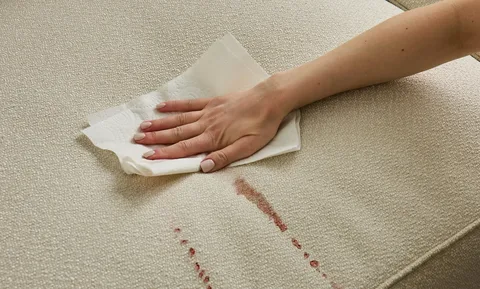
Blot with paper towels, pressing firmly without rubbing. Rubbing drives liquid sideways and deeper into the foam. Saturate the area with an enzymatic cleaner such as Rocco & Roxie or Nature’s Miracle, ensuring the product soaks as deeply as the urine did. Let it sit for 15 minutes minimum. Blot again, then air-dry completely with a fan nearby to discourage mold growth.
Dealing with Set-In Urine Stains
Old stains are a different fight. Uric acid has crystallised inside the foam, bacterial colonies are established, and discoloration has bonded with the fabric dye. A common home remedy involves mixing white vinegar and hydrogen peroxide (3%) as a pre-treatment for old urine stains.
While this combination can lighten surface discoloration and reduce some odor, it does not break down uric acid crystals the way purpose-built enzymes do. Use it as a first pass on budget, but expect to follow up with a proper enzymatic product or professional service for full elimination.
How to Clean Pet Vomit and Solid Waste from Upholstery?
Remove the solid matter first using a flat spatula or spoon, scooping away from the fabric rather than pressing into it. Blot remaining moisture with disposable towels, then apply an enzymatic cleaner to break down both the stain proteins and the bacteria left behind. Vomit contains stomach acid that can bleach fabric dye if left untreated for more than an hour, so speed matters more here than with any other pet stain.
Why Does the Sofa Still Smell After Cleaning?
The odor source is almost never on the surface. Pet urine wicks through fabric and saturates the polyurethane foam inside cushions, where bacteria thrive in the warm, moist environment. Surface sprays and baking soda neutralise what the nose can reach, but the colony living two centimetres deeper keeps producing odor compounds.
Humidity intensifies the cycle. Research published in Building and Environment confirmed that indoor relative humidity above 60 percent significantly accelerates bacterial growth on porous household materials.
Summer indoor humidity routinely crosses that threshold, dried urine reactivates and the smell returns within days. Layered accidents compound the problem, adding fresh bacteria to existing colonies. Only enzymatic treatment that reaches the foam, or professional extraction that flushes it, breaks the loop.
How Does Dubai's Climate Make Pet Sofa Damage Worse?
Air conditioning helps control humidity but introduces its own problems like bacterial growth and bad indoor air. Meanwhile, indoor air quality (IAQ) in sealed, air-conditioned homes can deteriorate as pet dander, dust mites, and allergens recirculate through the HVAC system without adequate filtration.
When Is Professional Sofa Cleaning the Only Choice?
Deep sofa cleaning by certified experts becomes necessary when home methods stop producing lasting results.
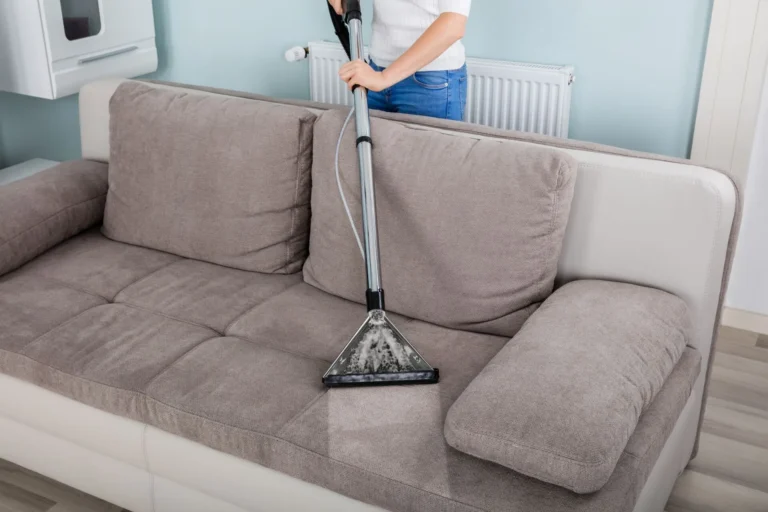
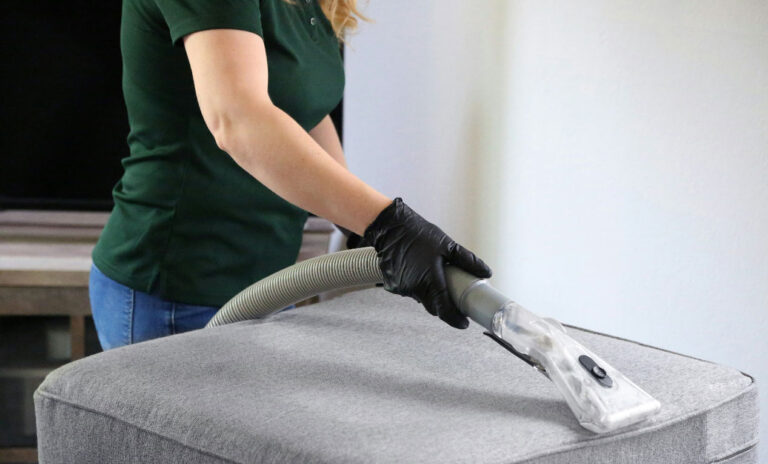
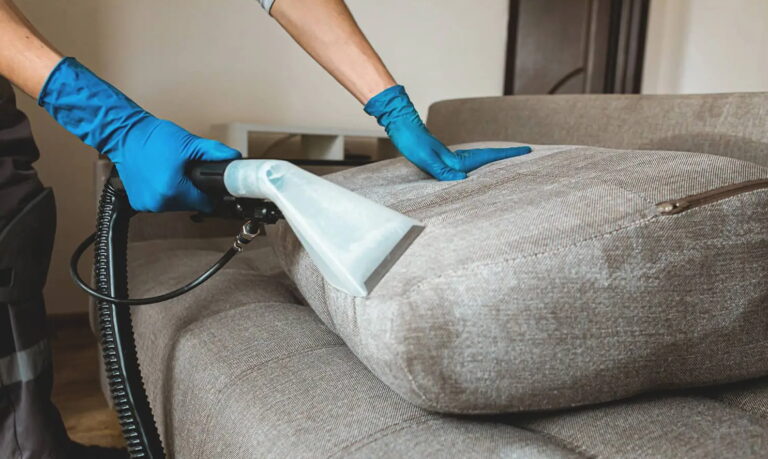
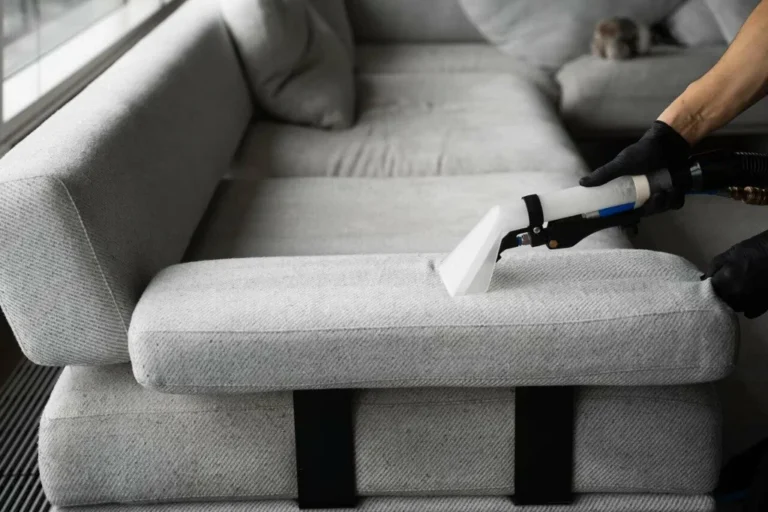
Professional upholstery services use hot-water extraction machines that inject solution directly into cushion foam and extract it under high pressure, pulling out bacteria, uric acid crystals, allergens, and embedded dander that no consumer product reaches. Industrial enzymatic treatments are formulated at concentrations significantly higher than retail versions.
For Dubai residents moving out of a rental, pet damage treatment is critical. Landlords routinely withhold security deposits for pet odor in upholstery. A single extraction session before handover costs a fraction of the deposit at risk.
Summary!
Pet hair, stains, and smell each require a different weapon, but they share one truth: surface cleaning is not enough. Anything that has soaked into foam, layered over months, or reactivated in a humid climate, deep extraction is the only permanent fix.
Schedule a sofa cleaning every three to six months from a certified company to protect indoor air quality and furniture. Churchill Gulf uses a unique, residue-free process to lift stubborn smells and hair from sofas without harsh chemicals. Every sofa cleaning method we use is safe for pets, safe for your family, and safe for the planet. Get same-day service, industrial enzymatic treatment, and a guaranteed odor-elimination.