The Right Way to Clean a Leather Sofa So It Actually Lasts Longer
To clean a leather sofa the right way, wipe it weekly with a dry microfiber cloth, then clean with mild natural soap and distilled water using a damp cloth. Condition the leather every 6 to 12 months and never use bleach, ammonia, or all purpose sprays on the surface.
Most people ruin their leather sofa trying to clean it. They grab whatever is under the kitchen sink, give the cushions a scrub, and wonder why the color looks washed out a week later. Bleach, all purpose sprays, wet wipes, and even baby shampoo can strip the natural oils from leather upholstery and leave it dry, cracked, and looking ten years older than it actually is.
The difference is rarely about effort. It is almost always about methods. Knowing the right leather cleaning products and techniques is the only thing standing between a couch that ages beautifully and one that fades, stiffens, and cracks before its time.
Key Points
- Cleaning and conditioning your leather couch on a regular schedule protects your investment and keeps the material looking rich for years.
- Always use gentle tools like microfiber cloths and natural soap to avoid stripping the leather’s natural oils.
- Weekly dusting and annual conditioning go a long way toward preventing cracks, fading, and premature wear.
Table of Contents
ToggleHow Often Should You Clean a Leather Couch?
It depends on how much the couch gets used, whether you have kids or pets, and what the manufacturer recommends. But these general timelines work for most households.
- Once a week, wipe the surface with a soft, dry microfiber cloth or use the soft brush vacuum attachment to lift dust and crumbs.
- Clean up spills and stains immediately. The longer a liquid sits on leather, the deeper it absorbs and the harder it becomes to remove without leaving a mark.
- Deep clean and condition your leather sofa every six to 12 months to maintain the surface seal and keep the material soft.
These steps apply to full finish leather and top grain leather sofas. If your couch is made from raw leather, aniline leather, or nubuck, contact a certified cleaning company before attempting anything at home.
Products You Should Never Use on Leather Furniture
Some cleaning products will permanently damage your leather couch in a single use. Know what to avoid before you pick up a cloth.
- Bleach, ammonia, and abrasive cleaners strip the natural oils out of the hide. Once those oils are gone, the leather dries out and starts cracking. There is no reversing that kind of damage.
- Two in one cleaner and conditioner products seem convenient but they never deliver the same results as a proper two step process. Clean first, condition after. Skipping a step always shows.
- Excessive water is a real problem. Leather is porous, and too much moisture soaks into the material, causing swelling, discolouration, and warping that dries unevenly.
- Glass cleaner, wood polish, all purpose sprays, and disinfectant wipes are not formulated for leather care. They contain alcohols and solvents that break down the leather’s protective finish and can bleach the dye.
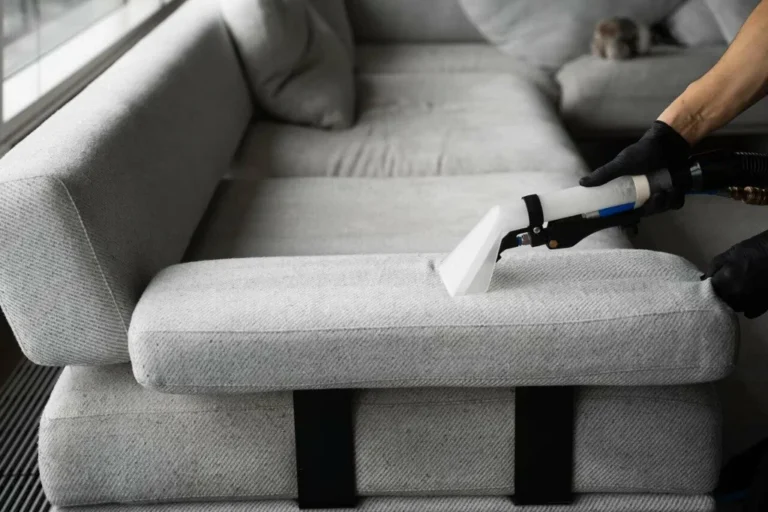
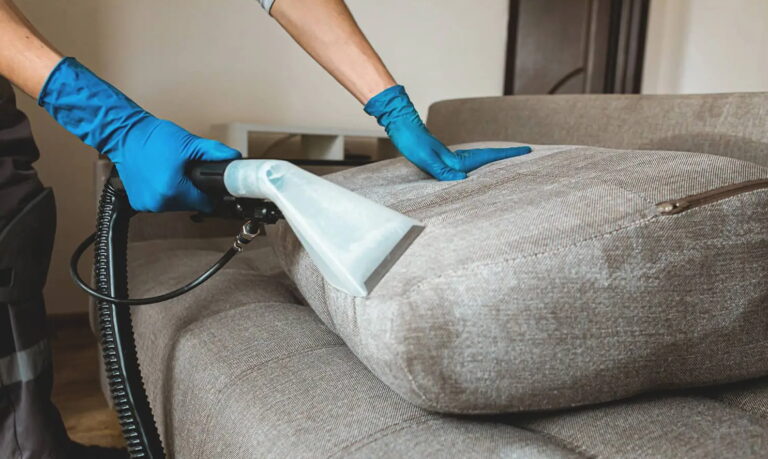
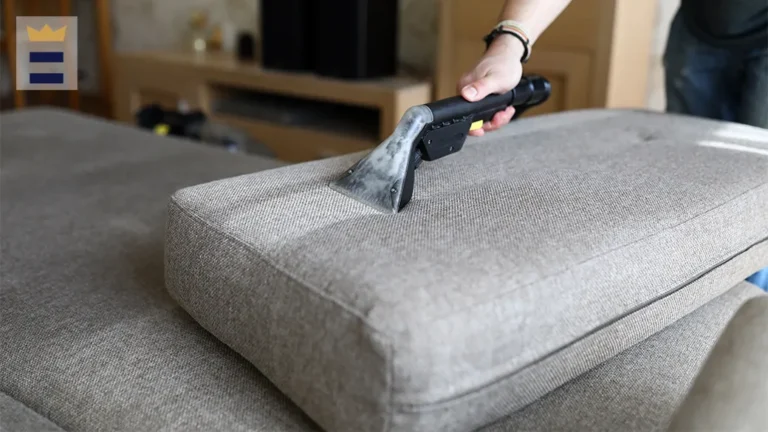
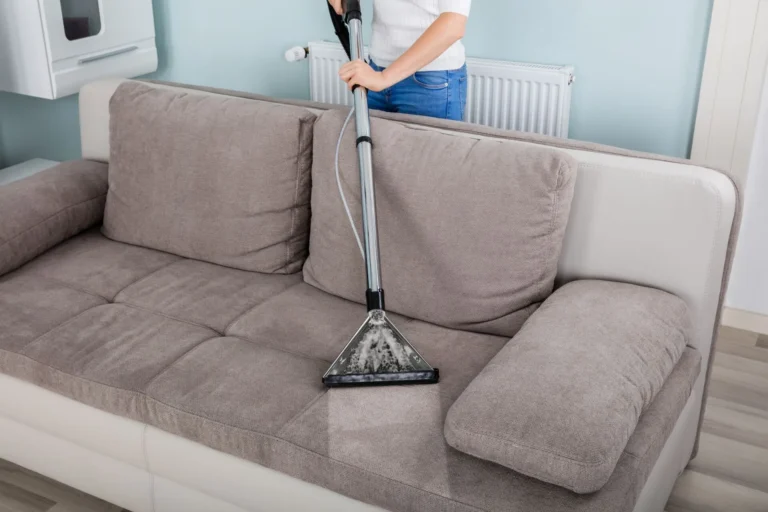
- Steam cleaners should never touch a leather sofa. The heat can flash out the leather’s natural fats and oils, which leads to premature ageing, brittleness, and surface cracking.
What Items Are Required to Clean Leather Safely?
Keep these materials ready for routine cleaning and unexpected spills.
Microfiber cloths: You need three or four to gently wipe, wash, and dry the surface without scratching the leather.
Distilled water: This prevents the hard mineral deposits and water rings that regular tap water leaves behind.
White vinegar: This safely neutralizes and lifts emergency stains.
Natural liquid soap: Mild unscented dish soap lifts everyday dirt without stripping the essential oils from the hide.
Olive oil or coconut oil: These condition the leather by restoring moisture and preventing the surface from cracking.
How to Clean a Leather Sofa Step by Step?
Routine leather sofa cleaning does not need anything expensive. A gentle approach with basic household ingredients does the job.
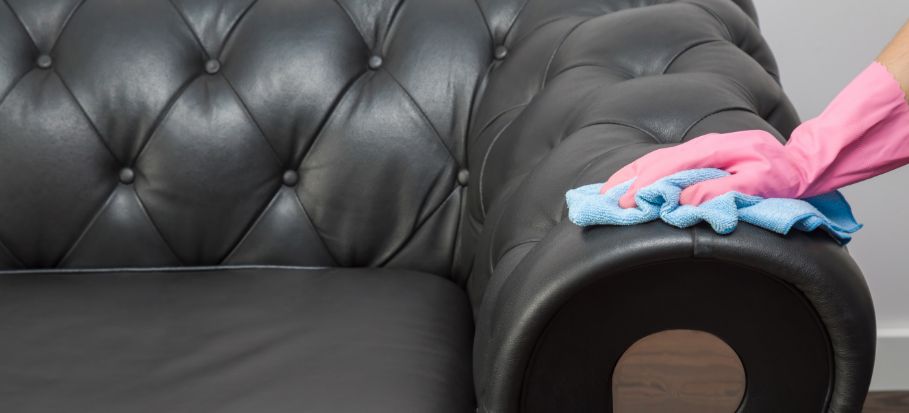
Remove Loose Dust: Start by wiping the entire couch with a dry microfiber cloth or running a vacuum with the soft brush attachment over the surface to pick up loose dust and debris.
Mix Cleaning Solution: Mix a few drops of mild, natural liquid soap with distilled water in a bowl.
Moisten the Cloth: Dip a microfiber cloth into the soapy mixture and wring it out thoroughly. The cloth should be damp, not dripping.
Wipe in Sections: Wipe the entire leather surface gently, working in sections so you do not miss any areas or let soap dry on the material.
Remove Soap Residue: Dampen a fresh cloth with plain distilled water and go over the leather again to remove any soap residue.
Dry the Surface: Dry the surface with a clean microfiber cloth. Do not leave moisture sitting on the leather.
How to Remove Stains from a Leather Couch?
Different stains need different treatments, but this method works as a safe first response for most spills on finished leather.
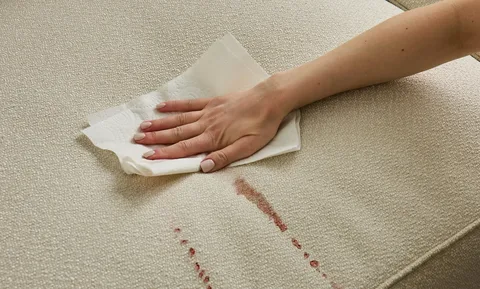
Act Quickly: Blot the stain immediately with a clean, dry cloth. Absorb as much liquid as you can without rubbing, because rubbing pushes the stain deeper into the leather pores.
Make the Solution: Mix equal parts distilled water and white vinegar in a bowl.
Treat the Spot: Dampen a microfiber cloth with the vinegar solution. Gently blot the stained area. Do not scrub.
Dry it Safely: Pat the area dry with a clean microfiber cloth and let it air dry away from direct heat.
How to Condition a Leather Sofa?
Leather conditioning creates a protective seal that guards the surface against oil, water, dirt, and food spills. Always test your conditioner on a hidden spot first.
Make the Conditioner: Mix a small amount of olive oil or coconut oil with a few drops of natural liquid soap.
Coat the Leather: Apply the mixture to the leather using a microfiber cloth, working in small circular motions. Let it sit for a few minutes so the leather can absorb the oils.
Buff the Surface: Wipe off any excess conditioner with a dry microfiber cloth and buff lightly until the surface has an even, soft sheen.
Maintenance Tips to Keep Your Leather Couch in Shape
Good habits between deep cleans make the biggest difference in how long your leather furniture holds up.
Weekly Dusting: Dust your leather sofa weekly to prevent dirt from grinding into the surface.
Quick Spill Response: Deal with spills the moment they happen. A five minute delay on leather can turn a quick wipe into a permanent stain.
Regular Conditioning: Condition the leather once or twice a year. In dry or air conditioned environments like Dubai, you may need to condition more frequently.
Proper Placement: Keep your couch away from direct sunlight and heat sources.
Early Wear Checks: Check the surface regularly for early signs of wear, scuffing, or cracking so you can address small issues earlier.
When to Call in a Professional for Leather Sofa Cleaning?
DIY cleaning handles everyday dirt and minor spills, but some situations need professional equipment and expertise to avoid making things worse.
- If stains have been sitting for weeks or have already set deep into the leather.
- Large area stains, grease marks, ink, or dye transfer on leather upholstery require specialised solvents and extraction methods.
- When the leather starts cracking, peeling, or showing visible fading.
- In hot, humid, or heavily air conditioned environments, sofa cleaning every 6 to 12 months keeps the material in condition.
Final Thoughts
Proper care extends the life of a leather sofa. This requires gentle cleaning, regular conditioning, and avoiding harsh chemicals. If the furniture needs deep cleaning, Churchill Gulf provides a sofa cleaning service in Dubai. They offer stain removal and conditioning using safe equipment at your location. Hiring a professional protects your investment